Electric versus gas forklifts: Fuel types and the quick answer
Choosing between electric versus gas forklifts starts with your environment, load requirements, and how the equipment needs to perform throughout the day. An electric forklift is often the refined choice for indoor warehouses, food storage, retail back rooms, and sites with limited ventilation. Electric forklifts run entirely on rechargeable batteries, while electric motors provide smooth control, quiet operation, and no tailpipe emissions at the point of use. In tight aisles, electric forklift trucks are more manoeuvrable. Electric forklifts are usually considered easier to operate with appropriate training. Because electric forklifts have fewer moving parts, they can require less maintenance than propane models. Still, charging time, battery infrastructure, lithium options, and duty-cycle planning all affect the total cost.
Fuel-powered forklifts use internal combustion engines and may be the better buy for outdoor yards, mixed indoor-outdoor work, long shifts, and demanding handling applications. In everyday conversation, gas can refer to several fuel types, not just gasoline. Gas forklifts are available with propane, also known as LPG or liquid petroleum gas. Replaceable cylinders make fuel delivery straightforward. Gas forklifts do not need charging, and propane forklifts maintain consistent performance during demanding work. Gasoline models are less common in many fleets, while diesel forklifts remain a strong option for heavy outdoor work. In particular, diesel forklifts offer higher lifting capacities, faster acceleration, and the sustained drive needed for larger loads and frequent pallet movement.
Liquid gas engines and natural gas engines are also available, although options depend on the model, local fuel supply, and rental support. The quick guide is simple: choose electric when indoor air quality, quiet operation, safety, and predictable shifts matter most. Choose propane or another internal combustion option when flexibility, fast refueling, and outdoor capability take priority. Electric forklifts are well suited to most operations with controlled schedules. Fuel-powered machines can suit work that must continue without pause. The right forklift is not simply a question of fuel costs or fuel types. It is a considered match between the forklift, the facility, and the work waiting at the end of every aisle.
Electric vs. Fuel-Powered Forklifts: Quick Fit Guide
| Forklift power type | Best-suited work environment | Key operating advantage | Planning consideration |
|---|---|---|---|
| Electric | Indoor warehouses, food storage, retail back rooms, and facilities with limited ventilation | Clean, quiet operation with smooth control, low day-to-day maintenance, and no tailpipe emissions at the point of use | Requires charging time, battery infrastructure, and duty-cycle planning |
| Propane / LPG | Outdoor yards, mixed indoor-outdoor work, distribution, construction supply, and industrial facilities | Fast refueling and flexible operation using replaceable fuel cylinders | Requires access to propane cylinders and appropriate fuel handling arrangements |
| Diesel | Heavy outdoor work where emissions and noise are less restrictive | Strong fit for demanding outdoor applications | Less suitable where indoor air quality, emissions, or noise restrictions are priorities |
| Gasoline | Applications requiring an internal-combustion forklift | Fuel-powered operating option | Less common in many material-handling fleets |
| Natural gas | Facilities with suitable model availability and local fueling access | Alternative internal-combustion engine option | Availability depends on the forklift model and local fueling infrastructure |
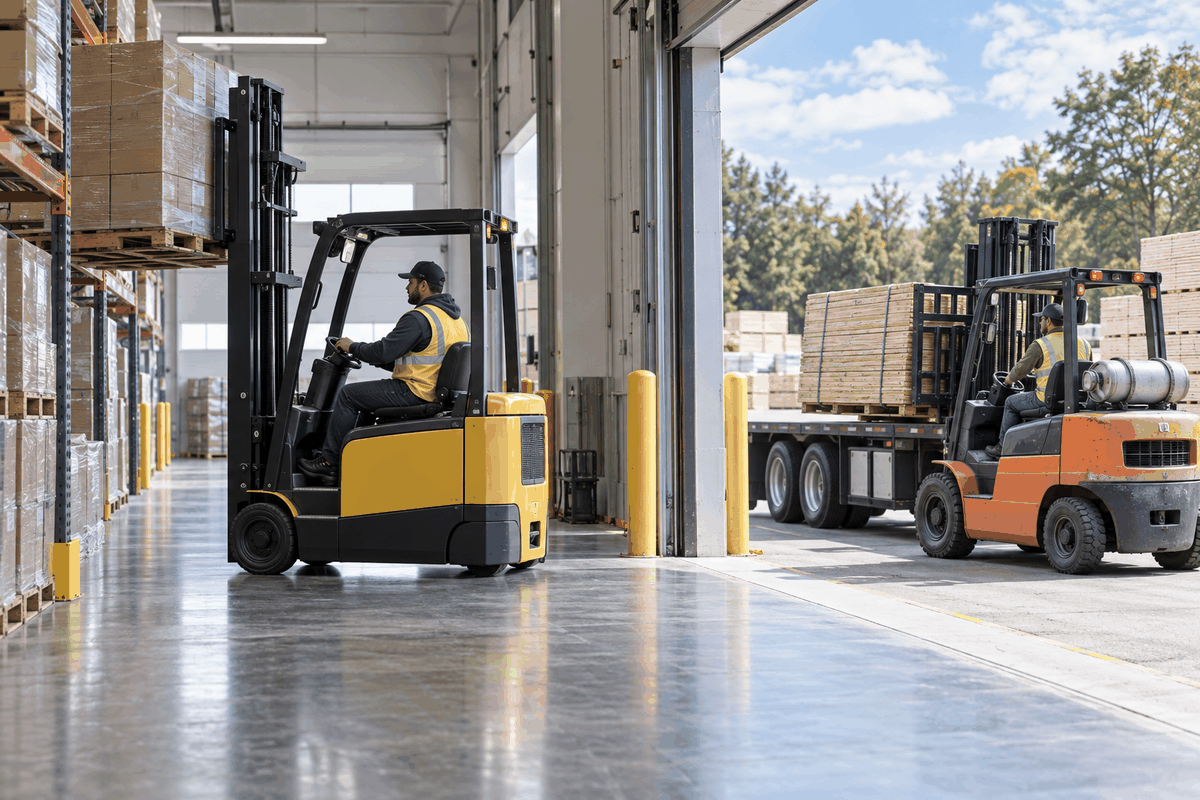
Electric forklift advantages for indoor handling and predictable shifts
For warehouses, production floors and distribution centres with repeatable daily workloads, an electric forklift is a capable choice for indoor handling. Because electric forklifts run entirely on rechargeable batteries, they produce no engine exhaust at the point of use. This supports better air quality, lower noise and greater operator comfort throughout the day. Modern electric motors provide smooth, controlled power from the first touch of the controls, often with faster acceleration than buyers expect from battery-powered equipment.
That responsiveness is valuable around racking, loading bays and busy pedestrian routes, where safety and precision matter as much as pace. electric forklift trucks are more manoeuvrable in many compact applications, helping operators place each pallet accurately in close quarters. Electric forklifts are also notably quieter, creating a calmer environment for teams who drive, load and handle materials across a full shift. With the right training, electric forklifts are usually considered easier to operate for precise, stop-start warehouse work. They can also be operated confidently in spaces where control and visibility are essential.
Maintenance planning can be simpler, too. electric forklifts have fewer moving parts than internal combustion machines and often require less maintenance than propane alternatives. When comparing electric versus gas forklifts, consider the full range of fuel types, including gas, lpg, propane, diesel and other fuel-powered forklifts. gas forklifts are available with liquid gas engines or natural gas engines, and gas forklifts do not need charging between shifts. In contrast, diesel forklifts offer higher lifting capacities, while propane forklifts maintain consistent performance in demanding outdoor or mixed-use settings. The right forklift is rarely defined by one feature alone: capacity, aisle width, ramp use, attachments, delivery schedules and rental needs should guide the specification.
Battery technology is central to the total cost calculation. Traditional lead-acid rechargeable batteries suit scheduled charging routines, while lithium options can offer quicker charging, longer usable run times and less day-to-day battery care. For most operations with predictable shifts and a dependable charging window, electric forklifts are a durable, cost-conscious better buy. Consider fuel costs, equipment uptime and the practical demands of different types of work together before making a final decision.
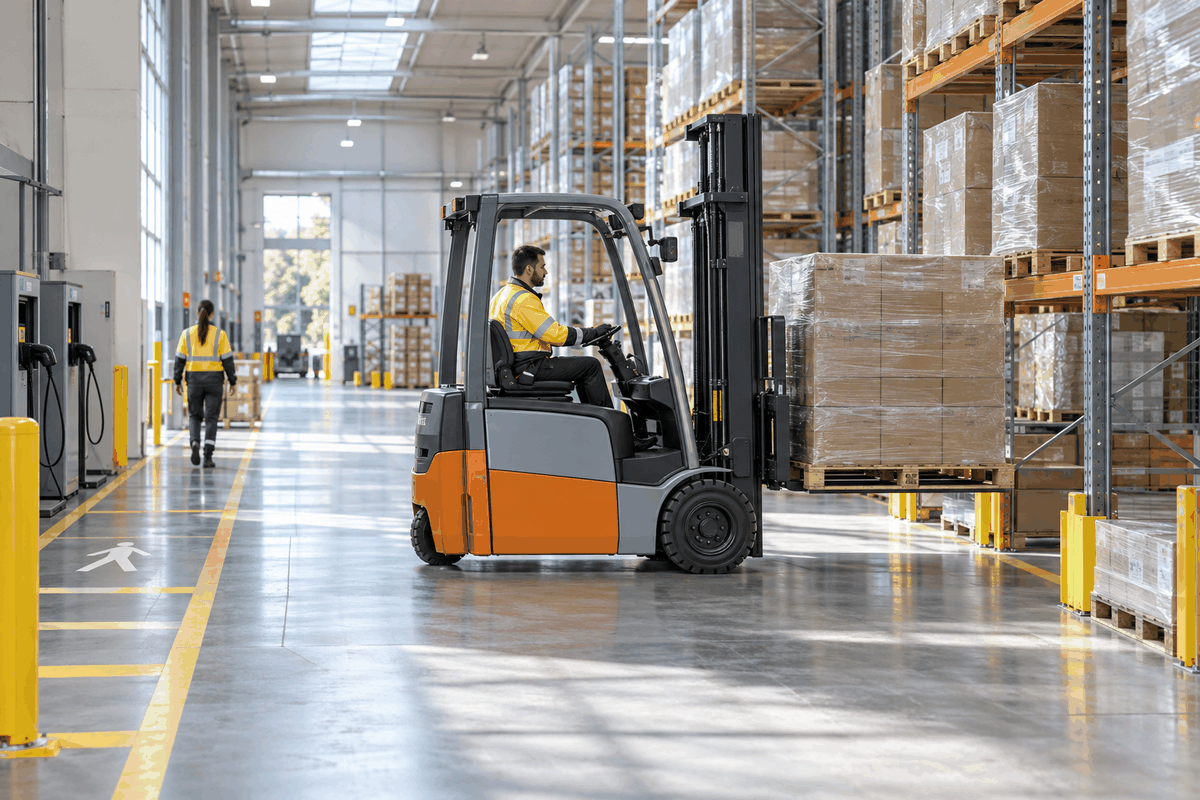
Electric forklift advantages
- Zero point-of-use exhaust supports cleaner indoor air quality in warehouses, production floors and distribution centres.
- Quiet operation reduces workplace noise, helping create a calmer environment across busy, full-shift handling activities.
- Smooth electric power provides responsive acceleration and controlled movement around racking, loading areas and pedestrians.
- Compact manoeuvrability helps operators position pallets accurately in narrow aisles and close-quarters storage spaces.
- Fewer moving parts can simplify maintenance planning and reduce routine servicing compared with propane forklifts.
- Lead-acid batteries suit scheduled charging, while lithium batteries offer faster charging, longer runtime and lower daily care.
- Predictable shifts and dependable charging windows make electric forklifts a practical, cost-conscious indoor handling choice.
Gas forklifts and fuel-powered forklifts for outdoor and variable-demand work
For operations that need equipment ready for long shifts, changing schedules, or demanding outdoor conditions, fuel-powered forklifts remain a practical, proven choice. gas forklifts do not need charging infrastructure or planned battery-change windows. A refuel or cylinder swap can return the forklift to service quickly. This flexibility is especially valuable at lumberyards, construction-material suppliers, farms, freight terminals, and other sites where workloads can surge with little notice.
Among the available types, propane forklifts maintain consistent power throughout the shift. With the right ventilation, safety, and emissions practices, they can also support indoor work. gas forklifts are available with lpg, propane, gasoline, and other fuel types. Their internal combustion systems may include liquid gas engines or natural gas engines. They are a familiar choice for mixed indoor-outdoor applications, such as loading delivery trucks in the yard before moving a pallet through the warehouse. Gasoline models can suit certain outdoor fleets, while diesel forklifts offer higher lifting capacities and strong torque for rougher surfaces, heavier loads, and extended use in open-air environments.
The right fuel choice involves more than purchase price. Consider load handling, travel distances, the operating environment, local fuel availability, maintenance expectations, total cost, and ongoing fuel costs. In an electric versus gas forklifts guide, it is worth noting that electric forklifts run entirely on rechargeable batteries. In many newer models, electric motors are powered by lithium technology. electric forklifts are often selected for quieter indoor applications, and electric forklift trucks are more manoeuvrable in confined aisles. electric forklifts are usually considered easier to operate, electric forklifts have fewer moving parts, and they may require less maintenance than propane-powered equipment. Still, most operations should weigh faster acceleration, drive requirements, training, rental needs, and how each truck will be operated. A professionally refurbished unit can be a better buy, providing dependable capability without the expense of new equipment when the forklift is matched carefully to the application.
Fuel forklift selection checklist
- Match fuel type to operating conditions: propane for mixed use, diesel for heavy outdoor work, gasoline for suitable open-air fleets.
- Confirm lifting capacity, mast height, tire type, and attachment needs before comparing available trucks.
- Consider refueling access, cylinder storage, local fuel availability, and expected fuel costs across long shifts.
- Assess indoor use requirements, including ventilation, emissions controls, and operator safety procedures.
- Review travel distances, surface conditions, and peak-demand periods to ensure dependable performance.
- Compare maintenance expectations and parts support for each engine type and model.
- Explore professionally refurbished forklifts when specialized configurations or lower acquisition costs are priorities.
Compare total cost, capacity and duty cycle before you buy
The right forklift is rarely the one with the lowest sticker price. The better buy matches your loads, aisle widths, lift heights and daily run time without adding unnecessary repair, energy or handling costs. Start by defining the job: your heaviest typical load, maximum lift height, daily operating hours, and whether the truck will work indoor, outdoors or in both settings.
For most operations, capacity deserves close attention. A forklift’s rated capacity can change with attachments, load centre and lift height. A truck that appears suitable on paper may be undersized in day-to-day use. Choose enough capacity to allow a sensible margin, but avoid oversizing. Larger machines can cost more, take up more space and be harder to manoeuvre.
Power choice should suit the duty cycle and site conditions. Electric forklifts offer quiet operation, no tailpipe emissions and often lower routine fuel costs, making them a strong choice for warehouses and other indoor applications. Gas forklifts can suit demanding outdoor work, longer continuous shifts and sites where quick refuelling keeps equipment moving. Consider more than the purchase price, including battery or charger condition, fuel availability, planned maintenance and operator preferences.
Finally, review safety features and service history with the same care you give capacity. A professionally refurbished forklift with documented inspections, sound tyres, responsive controls and the right configuration can deliver dependable performance at a more sensible total cost than new equipment that exceeds the job’s real demands.
Frequently asked questions
Are electric forklifts better than gas forklifts?
Neither is universally better. Electric forklifts are usually best for indoor warehouses because they are quiet, produce no tailpipe emissions, and need less routine maintenance. Gas, propane, and diesel forklifts are often better for outdoor work, variable workloads, heavy loads, and long shifts requiring quick refueling.
Can propane forklifts be used indoors?
Propane forklifts can operate indoors when ventilation, emissions controls, and workplace safety practices are appropriate. However, electric forklifts are generally the preferred option for enclosed spaces, food storage, and locations where indoor air quality is a primary concern.
How long does an electric forklift battery last?
Run time depends on battery type, load weight, travel distance, lift frequency, temperature, and operator use. Lead-acid batteries commonly suit scheduled shifts with dedicated charging time, while lithium batteries may provide longer usable run time and faster opportunity charging.
What fuel is used in gas forklifts?
Gas forklifts may use propane, gasoline, diesel, or natural gas depending on the model. Propane, also called LPG, is widely used because cylinders can be replaced quickly. Diesel is commonly chosen for high-capacity outdoor applications and rougher ground conditions.
Are electric forklifts cheaper to maintain?
Electric forklifts often have lower routine maintenance needs because they have fewer engine-related components, fluids, and moving parts. Battery care and charger condition still matter, so the overall cost comparison should include electricity, battery replacement, maintenance, and expected daily use.
What should I check before buying a used forklift?
Check the capacity plate, hour meter, service records, mast, chains, forks, hydraulics, tires, brakes, steering, and battery or fuel system. Confirm that lift height, attachment use, aisle width, and actual load weight match the truck’s rated capacity for your application.
Choose and inspect the right forklift for your site
For most operations, the better buy is not simply the machine with the highest lift capacity or lowest purchase price. It is the forklift that fits the realities of your site. In the electric versus gas forklifts decision, consider loads, aisle widths, lift heights, floor conditions, shift length, handling needs, and whether work is mainly indoor or outdoor.
An electric forklift is often a strong choice for clean, quiet warehouse work. electric forklifts run entirely on electric motors and rechargeable batteries, including lithium options. electric forklifts have fewer moving parts, and electric forklift trucks are more manoeuvrable in confined spaces. electric forklifts are usually considered easier to operate, can offer faster acceleration, and may require less maintenance than propane models.
Fuel-powered forklifts, including gas forklifts, propane, lpg, and diesel forklifts, may be a better fit for demanding outdoor work, longer shifts, and jobs where rapid refuelling matters. gas forklifts are available with internal combustion options, including liquid gas engines and natural gas engines. gas forklifts do not need charging. diesel forklifts offer higher lifting capacities for heavier-duty work, while propane forklifts maintain consistent power as fuel levels decline. Compare fuel types, fuel costs, total cost, safety, and the equipment your team needs to operate with confidence.
Site-fit inspection checklist:
- Review the mast, chains, carriage, forks, tires, hydraulics, steering, brakes, and battery or fuel system.
- Ask for service history. Confirm the hour meter, capacity plate, pallet handling requirements, and attachments match the truck’s intended application.
- Take time to drive the forklift and test lift functions under appropriate conditions. Make sure the controls feel responsive, predictable, and suited to the work.
- Confirm that training, routine pre-shift inspections, and an operator’s guide match the specific model and how it will be operated.
A professionally refurbished forklift deserves the same scrutiny as any major capital purchase. Whether you are buying or considering rental coverage for a temporary need, a knowledgeable supplier can help compare practical types and options, arrange delivery, and source a model suited to your site.
Forklift selection checklist
- Match capacity, lift height, aisle width, and attachments to your typical loads and workspace.
- Choose electric power for clean indoor work; consider propane or gas for outdoor use and rapid refueling.
- Inspect the mast, chains, carriage, forks, tires, hydraulics, steering, and brakes for wear or damage.
- Review service records, hour meter accuracy, capacity plate details, and compatibility of installed attachments.
- Test-drive the forklift and verify responsive controls, smooth steering, braking, and lift functions.
- Confirm battery condition or fuel-system integrity, especially for used or professionally refurbished equipment.
- Support safe operation with model-specific training, pre-shift inspections, and a current operator guide.
Forklift selection checklist
- Match capacity, lift height, and attachments to your typical loads and storage layout.
- Measure aisle widths, door clearances, turning space, and floor conditions before choosing a model.
- Select electric power for clean indoor work; consider gas or propane for demanding outdoor duties.
- Inspect the mast, chains, carriage, forks, tires, hydraulics, steering, and brakes for wear.
- Review service records, hour meter accuracy, capacity plate details, and attachment compatibility.
- Test-drive the forklift and verify responsive steering, braking, lifting, lowering, and control operation.
- Confirm operator training, pre-shift inspection requirements, and model-specific documentation are available.